

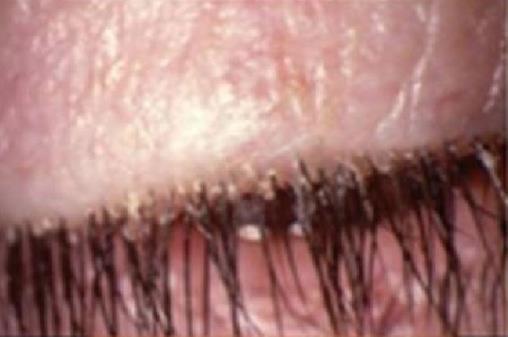
- 68 year old female complaining of red eye itchy eyes with lid crusting
- The photo shows the clinical presentation
- She had mild punctate keratitis as well as low TBUT of 6 seconds in both eyes
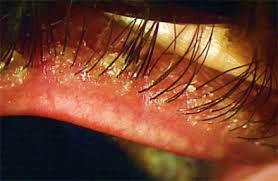
The eyelash was twirled, epilated and examined under a light microscope
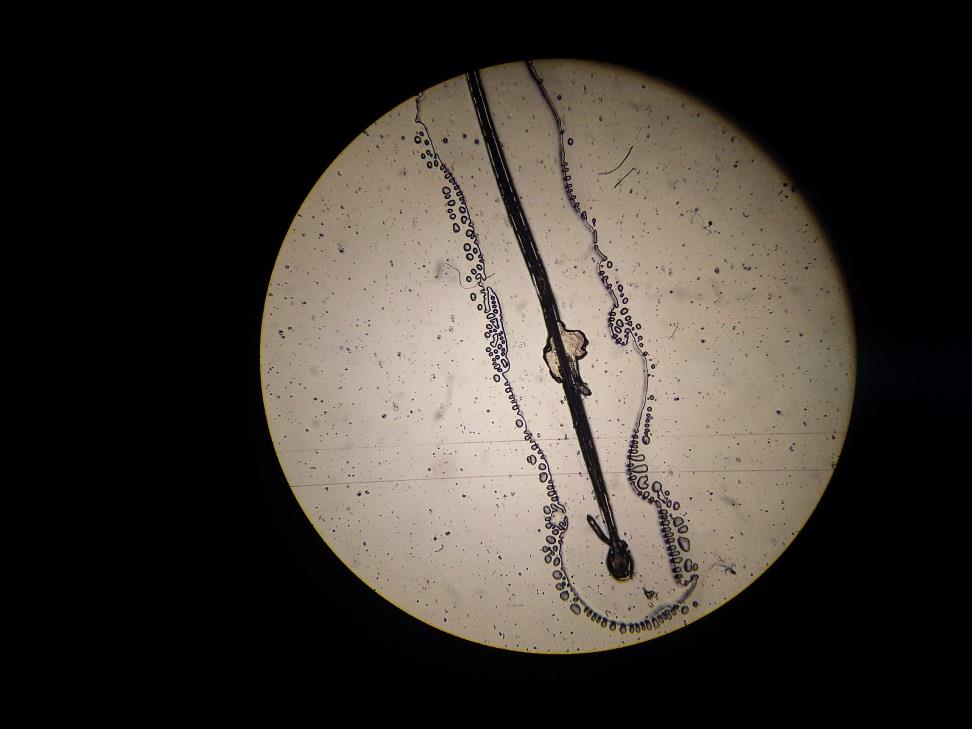
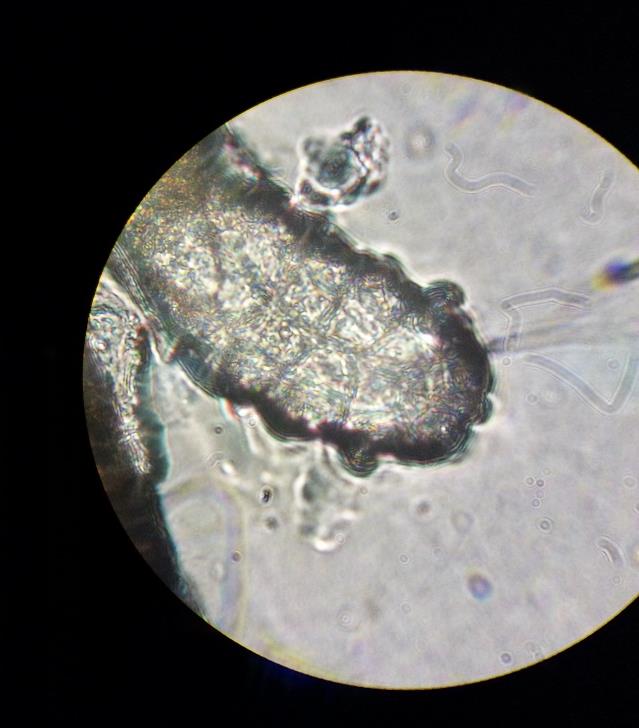
Demodex folliculorum
- Demodex is not easily detected and sampling methods used in assessing the presence of demodex by microscopy include, skin scrapings, adhesive bands, skin impressions, expressed follicular contents, comedo extraction, hair epilation, and punch biopsies
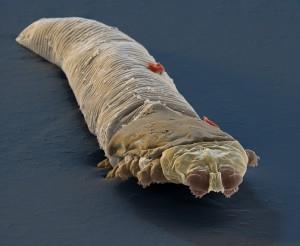
Demodex spp.
- Most common ectoparasites in man, occurs in 10% of skin biopsies and 12% of follicles
- 0.3 -0.4mm long with four pairs of legs on the anterior 1/3 of their bodies (brevis shorter and fatter)
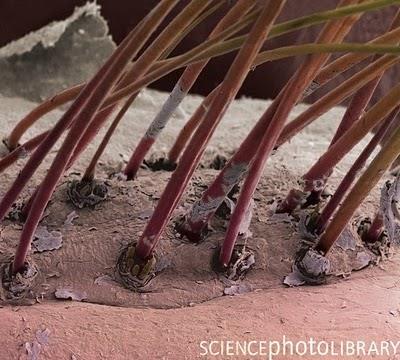
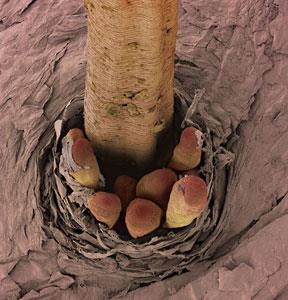
- Several mites (D. folliculorum) occupy a single follicle with their heads directed inward and tail sticking out
- D. Brevis burrows deeper into the sebaceous glands and ducts
- D. folliculorum is more common and affects the scalp, neck, chin, cheeks, forehead, ears and importantly the eyelids
- The mites feed on epithelial cells and sebum (oil) which accumulate in the hair follicles
- The mites are more active at night and can leave the follicles to move around on the skin at a rate of 8-16mm per hour
- The mites can not survive outside the host body and direct contact is required for transmission of the mites between people
What does it do?
- Prevalence increase with age with men being more affected than women (23% vs 13%)
- Penetration of demodex into the dermis , or more commonly an increase in the number of mites in the pilosebaceous glands triggers inflammation presenting in the typical facial skin lesions
- The mite does not have an anus, at the end of the 14 day life cycle all the faeces are released into the follicle contributing to the inflammation
- Demodex is also a host to numerous bacteria and other organisms which on their own can cause inflammation
Demodex dermatitis
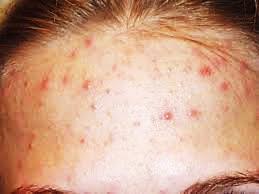
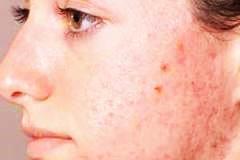
- To complicate matters – clinical presentation of demodex infestation is similar to that of rosacea and seborrheic dermatitis
- Facial flushing and blushing, erythema, telangiectasia, scaling and facial skin roughness with inflammatory lesions
- Blepharitis – very common
Treatment
- 50% tea tree oil combined almond oil preparations, twice weekly, quite irritating to the eye
- Navi Bleph™ a tea tree oil foam used bid
- Petroleum jelly or Vaseline at night can also help by smothering the mites in the eyelash follicles
- Medical treatment may include topical crotamiton bid as (Not in SA)
- Topical permethrin (very irritating to the eye) broad spectrum anti-parasitic agent (Not in SA)
- 200mg oral ivermectin, broad spectrum anti-parasitic agent (Not in SA)
- 1% topical ivermectin cream will soon be available which is less irritating to the eye (Not in SA)
- Sodium sulfacetamide 10% + sulphur 5% topical application – allergy may be a problem
- Tetracyclines taken orally