Biofilms
- Static adherent group of microorganisms encased in polymeric material increasing resistance to biocides/disinfectants by up to 1000X
- Consists of polysaccharides, proteins, nucleic acids and lipids produced by the microorganisms and host cells or secretions
- Biofilms are resistant to pH variations, osmotic shock, desiccation, biocidals, disinfectants and preservatives
- Biofilms on lenses and cases depend on surface hydrophobicity of the surface
- Biofilms tend to occur more on the posterior surface of the lens
- Most commonly found microorganism in storage cases are coagulase-negative staphylococci and gram-positive bacilli.
- Pseudomonas aeruginosa and serratia marcescence are also common
Biofilms continued – DEBS
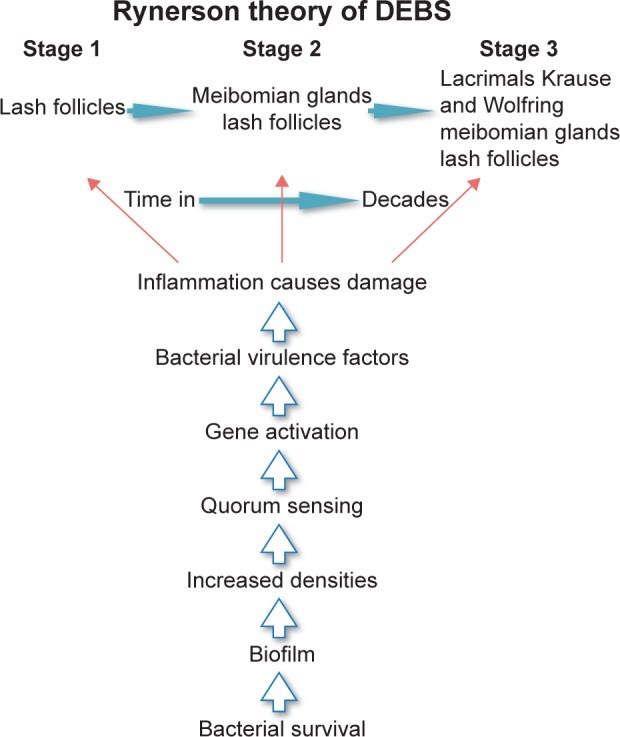
Contact lens care products
- Buffers and salts
- Preservatives
- Surfactants
- Chelating agents
- Wetting agents
- Hydrogen peroxide
- Enzyme cleaners
Common preservatives: Past and present
| Compound class | Examples |
|---|---|
| Quaternary ammoniums | Benzalkonium chloride (BAK) Polyquaternium -1 (PQ1) |
| Mercurials | Thimerosal |
| Alcohols | Chlorobutanol/Benzyl alcohol |
| Carboxylic acid | Sorbic acid |
| Phenols | Methyl/Propyl paraben |
| Amides | Chlorhexidine |
| Others | Disodium ADTA |
The USA Pharmacopoeia standards for Preservatives in ocular Topical agents (PET – preservative effectiveness test)
- (PET) involves inoculating a solution containing the preservative with Staphylococcus aureus, Pseudomonas aeruginosa, and Escherichia coli, as well as Aspergillus niger and Candida albicans
- Samples of the preserved solution are inoculated with 106 colony forming units/mL at Day 0 with each organism (tested separately)
- Survivors are counted at Days 7, 14, and 28
- Requirements to pass the PET include a 1-log reduction in bacteria by Day 7
- A 3-log (99.9% kill rate) reduction in survivors by Day 14
- And no increase in survivors from Days 14 to 28
- For fungi there can be no increase in survivors from Day 0 to Day 28.
Buffers and salts
- pH of most solutions vary between 4 – 8.5
- pH limits for epithelial damage <4 and >10
- Solutions are normally formulated to achieve self-sterilization and wetting and could therefore have high or low pH in order to keep stability
- Buffers are used to keep the solution pH stable
- Low buffering means pH can change quickly when the solution is introduced into the eye, high buffering is used to keep pH constant
- Typically the most alkaline solutions (high pH) tend to be the best buffered and changes the least
- Buffers are sodium phosphate, borate, tromethamine or bicarbonate
- Most commonly used are borate and bicarbonate
- Salts such as NACL keeps the solution isotonic with tears and maintains osmotic pressure
- Solutions differing by as little as 0.2% NACL can have an effect on corneal thickness
- Typically lower osmolarity (0.2% NACL) causes less discomfort than higher osmolarity (1.8% NACL)
Preservatives the “necessary evil”
- Most ocular medications and solutions contain a unique mixture of active ingredients, preservative, drug delivery system, viscosity-increasing agents, buffers and stabilizers, and a vehicle by which all the ingredients are carried
- Preservatives are considered the culprit in damaging the corneal epithelium and glycocalyx, disrupting the tear film and leading to OSD
Ocular preservatives: associated risks and newer options
Indu P. Kaur et al., Cutaneous and Ocular Toxicology, 2009; 28(3): 93–103
- Preservatives restrict or inhibit the growth of microorganisms and biofilms
- All preservatives are toxic, toxicity being dose related
- In the eye preservative turnover is very low and quaternary molecules can be retained in the ocular tissue for up to 7 days
- Some preservatives are lipophilic and bind to ocular tissue and lens surfaces
- Repeated doses of preservatives have a cumulative effect – prolonged contact with the epithelia
- Types of mechanisms of corneal damage include:
- Detergent effects causing loss of tear film
- Toxic effects to the corneal and conjunctival epithelia
- Immuno-allergic reactions
- Finally, concentration needs to be effective for antimicrobial activity while being non-toxic to the ocular surface
Mechanism of action of preservatives
- Two main categories
- Detergents – act upon microorganisms by altering cell membrane permeability and lysing cytoplasmic contents – ocular toxicity is common
- Oxidants – small molecules penetrate cell membranes and interfere with cellular function (disrupt metabolism). Cell membranes are destabilized but less than with detergents – ocular toxicity is negligible due to epithelia being equipped with antioxidants and catalases to neutralize effects of low level oxidants
- Detergents include benzalkonium chloride (BAK), polyquaternium-1 (PQ1), alcohol preservatives, and phenols.
- Oxidants include stabilized oxychloro complex (SOC), sodium perborate, thimerosal, sorbic acid, and chlorhexidine.
Preservatives – Benzalkonium chloride (BAK)
- BAK is a quaternary ammonium compound and can be found in soaking and disinfection solutions as well as a host of other eyedrops in concentrations between 0.004 – 0.01%
- BAK is the most common preservative used in eyedrops and specifically anti-glaucoma medications
- It is extremely effective in combating microbial contamination by inducing necrosis (0.05 – 0.1%) and cellular apoptosis (0.01%) by way of disrupting the cellular membrane in bacterial cells
- BAK interferes with the integrity of the superficial lipid layer (0.004%) of the tear film – reducing TBUT and tear film stability
- Impact of BAK on corneal health
- Decreased epithelial cell integrity (in which the barrier is compromised and healing is impaired, drug penetration increased);
- Increase in conjunctival inflammatory cells;
- Loss of goblet cells;
- Effects on the contractility of corneal fibroblasts, which can alter the shape of the cornea and measurement of intraocular pressure;
- Dose-dependent disruption of cytoplasmic membranes and cell detachment;
- Dose- dependent swelling and desquamation of superficial epithelial cells;
- Apoptosis
- BAK can be absorbed into contact lens materials (not PMMA)
Preservatives – Chlorhexidine acetate (CHX)
- CHX is used in concentrations between 0.002 – 0.006% in slightly alkaline solutions
- Nonirritant bactericide of low toxicity effective against gram-positive bacteria but inactive against spores
- Efficacy against Proteus and Pseudomonas is low but improves when EDTA is added
- Organic matter such as serum and phospholipids reduces the efficacy
- CHX forms soluble salts with bicarbonate, borates, carbonates, citrates, phosphates, and sulfates – cannot be used with eye drops containing sulfates, atropine, neomycin, physostigmine, and zinc
- Kill time with low concentrations >10 hours
Preservatives – Chlorobutanol
- Alcohol based with no surfactant action
- Method of action is cell lysis by way of disrupting microbial cell membrane lipids
- Concentrations 0.2 – 0.5% – tends to cause irritation in >50% of patients
- 0.5% causes cell retraction, cessation of normal cytokinesis, cell movement, mitotic activity and degeneration of epithelial cells
- Does not affect the lipid layer of the tear film
- Less toxic than BAK and occur less rapidly
- Synergistic activity when combined with phenols and quaternaries such as BAK and PQ1
Preservatives – Thimerosal
- Thimerosal (also known as thiomersal or Merthiolate) is a mercury-based compound that was widely used in topical ophthalmic treatments and vaccines in the mid 20th century.
- Its antimicrobial action is due to the ethylmercury that is released when thimerosal breaks down into ethylmercury and thiosalicylate.
- Act through intracellular calcium mobilization.
- Was used in concentrations between 0.001 – 0.002% with both RGP and soft lens solutions
- Highly potent antimicrobial—40 to 50x more effective than phenols against Staphylococcus aureus.
- It fell into disfavor starting in the 1970s, with the first reports of potential neurotoxicity and concern about the metabolism of methylmercury, especially regarding rates of autism with vaccines that contain thimerosal—an issue that remains contentious to this day
- Thimerosal also appears to cause an allergic response, and it has been reported as one of the most common contact allergens in the general population
- Slow acting and frequently used in combination with CHX and EDTA
- FDA banned thimerosal and other mercury containing agents
Thimerosal in ocular solutions
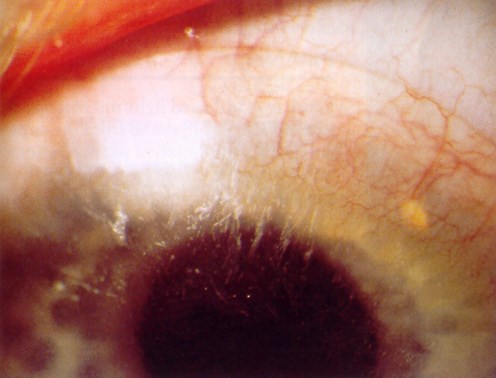
- Thimerosal was at one point widely used in conact lens solutions, where it caused an epidemic of problems
- One of the most allergenic of preservatives, thimerosal acts as a hapten (partial antigen) and induces delayed hypersensitivity
- In ophthalmic solutions at concentrations of 0.004% to 0.005%, thimerosal induced delayed ocular hypersensitivity reactions
- This included superior limbic keratoconjunctivitis, conjunctival hypearemia, limbal follicles, giant papillary conjunctivitis, corneal infiltrates, superficial punctate keratitis, pseudo-dendritic corneal lesions, epithelial opacities, and neovascularization
- Thimerosal was clearly the inciting agent, as studies showed that the signs of allergic conjunctivitis resolved when the thimerosal-containing solution was removed
Preservatives – Polyquats (PQ1)
- Like BAK, PQ1 is a detergent preservative made from cationic quaternary ammonium compounds containing an even-number of alkyl chains
- Originally used as an anti-malarial water treatment, swimming pool disinfectant, cosmetics preservative, anti-fungal water-based inks, industrial disinfectant, and in anti-bacterial wipes
- Same family as CHX, molecular size and weight is larger which prevents penetration into soft contact lens materials
- In vivo studies have shown ocular toxicity and corneal breakdown of intraepithelial cell junctions with PQ1, although much less so than with BAK
- Main detriment is tendency to reduce the number of conjunctival goblet cells – decreasing mucin and aqueous production
- Used in the current generation of multipurpose, wetting solutions and artificial teats
- Polymeric nature improves effectiveness and therefore they can be used in lower concentrations
- Cationic and therefore effective against both gram-positive and negative bacteria
- Work by binding to phospholipids in bacterial cell membranes leading to cellular lysis rather than just disrupting the cell walls
- Moderately effective against fungi and acanthamoeba – but combined with other preservatives enhances their effectiveness
- Biguanides such as Dymed or PHMB in concentrations 0.00005 – 0.00001%
- Polyquartrinim-1 or Polyquad which has the largest molecular size. Concentration is normally 0.001%
Preservatives – Disodium ethylenediaminotetraacetate (EDTA)
- EDTA is a known as a ionic chelating agent
- It disrupts the integrity of the cell wall and so accelerate the action of other preservatives such as BAK and PQ1
- Concentration is usually 0.1%
- Especially effective against Gram-negative bacteria cell wall lipopolysaccharide structure and is used with other preservatives/antibiotics to enhance their effectiveness against P. Aeruginosa and Eschirichia coli
Preservatives – Amidoamine
- Aldox is a cationic surfactant effective against fungi and acanthamoeba
- Interacts with cell walls to allow penetration
- Concentrations of 0.0005% are normally used
- Quite toxic and will normally cause some degree of ocular discomfort and tissue damage
Preservatives – Sorbate or sorbic acid
- Limited antimicrobial activity
- Pass through plasma membrane and dissociate in the cytoplasm, release protons and inhibit growth via acidification
- Adverse reactions are infrequent but a punctate keratitis may occur
- Used ”for sensitive eyes” and contact lens care products
Preservatives – Sodium Perborate (GenAqua)
- Oxidative preservative common in dry eye products
- Effective against numerous bacteria as well as Aspergillus niger (fungus)
- When sodium perborate combines with water, it is converted to hydrogen peroxide
- It is considered a direct acting in vitro mutagen
- It oxidizes cell walls or membranes, affects membrane bound enzymes, disrupts cellular function (protein synthesis)
- When it enters the eye it is decomposed to water and oxygen by catalase and other enzymes in the conjunctiva
- Although hydrogen peroxide is safe below 3% or 100ppm, levels higher cause ocular irritation and damage
Preservatives – Stabilized Oxychloro Complex (SOC or Purite)
- Oxidative ophthalmic preservative effective against many types of bacteria, Aspergellus niger and some virusses
- Consist of 99.5% oxychloro species and 0.5% chlorate as well as trace elements of chlorine dioxide
- Its mechanism of action is not fully understood – probably stems from generation of chlorine dioxide which disrupts protein synthesis
- SOC dissipates by converting to products normally found in tears – sodium ions, chloride ions, oxygen and water
- Gentle preservative ideal for chronic use
- Efficacious in concentrations as low as 0.005%
- Not yet used in glaucoma medications but available in dry eye products as well as contact lens solutions
Preservatives – sofZia (Alcon)
- sofZia is a new, proprietary, ionic, buffered solution consisting of zinc, borate, propylene glycol, and sorbitol,
- These chemicals themselves are not significantly toxic to the ocular surface
- In addition to its biocidal activity against the five required challenge organisms, sofZia was tested against Ralstonia pickettii, Staphylococcus epidermidis, Streptococcus pneumoniae, Hemophilus influenzae, and Fusarium solani.
- The fungal challenge test showed a steady decrease in surviving organisms over 14 days
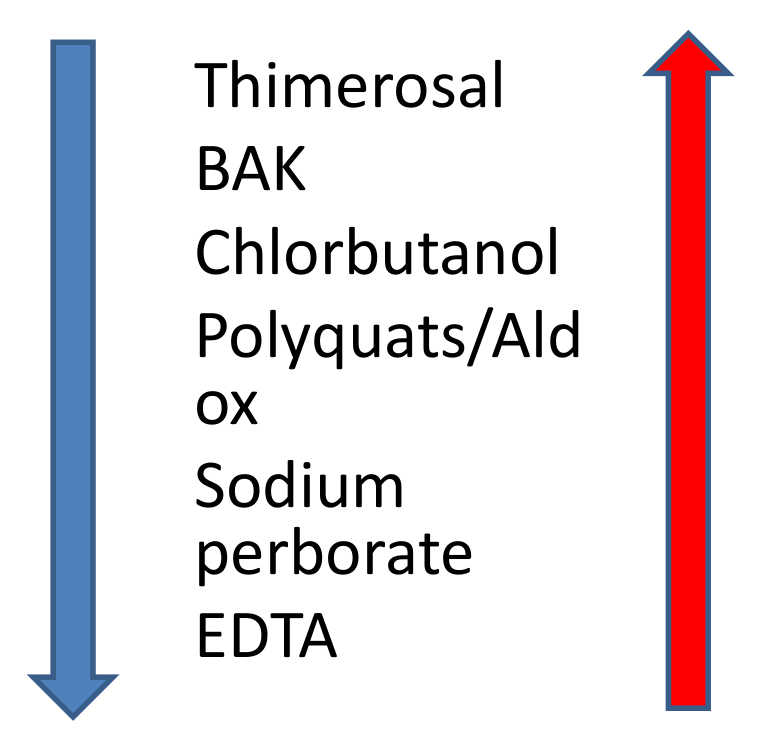
Preservatives – decreasing order of effectiveness – increasing order of tocicity
Surfactants – soaps
- Surfactants are used to remove biofilms from contact lenses
- Disrupt the surface tension and are amphiphilic – both hydrophobic and hydrophillic
- Chemically attach to the biofilms and this can then be rubbed of the lens surface
- Examples include – Poloxamides (ReNu and OptiFree), Polaxamers , Isopropyl alcohol (Miraflow), Tyloxapol (Complete Moisture Plus)
Demulcents & wetting agents
- Propylene glycol is used to enhance comfort – demulcent
- Wetting agents decrease the wetting angle of contact lens material
- Have both lipophilic and hydrophilic properties – lipophilic component binds to the lens surface with hydrophilic components exposed – readily wettable layer
- Examples include polyvinyl alcohol (PVA), povidone, tetronics, polydorbate 80
Hydrogen peroxide
- 3% hydrogen peroxide eliminates a variety of micro-organisms including bacteria, fungi, yeasts spores and viruses
- It is self preserved and unaffected by organic matter or salts
- It can penetrate biofilms and 10 minutes of exposure will kill most bacteria
- Hydrogen peroxide is lipid soluble – penetrates cells easily
- Produces hydroxyl free-radicals that attacks the organisms lipid membrane, DNA, mitochondria and other cell components
- Free radicals exist for a short time and the human body is accustomed to dealing with peroxide
- Hydrogen peroxide is neutralized to less than 20 ppm in a six hour period – residual peroxide in the lens matrix is dealt with by the bodies antioxidant enzyme catalase
| Trade name | Active ingredients(s) | Preservative(s) |
|---|---|---|
| Bausch & Lomb | ||
| Preservative Free Moisture Eyes | 0.95% Propylene glycol | None |
| Bausch & Lomb Soothe Lubricant (Preservative Free) Eye Drops | 0.6% Glycerin, 0.6% propylene | None |
| Moisture Eyes PM | White petrolatum, mineral oil | None |
| Allergan | ||
| Refresh Plus | 0.5% Carboxymethylcellulose | None |
| Refresh Tears | 0.5% Carboxymethylcellulose | Purite (stabilized oxychloro complex – SOC) |
| Refresh Celluvisc | 1% Carboxymethylcellulose | None |
| Refresh Endura | 1% Polysorbate 80, 1% glycerine | None |
| Refresh Liquigel | 1% Carboxymethylcellulose | Purite (stabilized oxychloro complex – SOC) |
| Refresh PM | White petrolatum, mineral oil | None |
| Optive Eye Drops | 0.5% Carboxymethylcellulose, 0.9% glyserine, levocarnitine, erythritol | Purite (stabilized oxychloro complex – SOC) |
| Optive Fusion Eye Drops | 0.1% hyaluronate, 0.5% Carboxymethylcellulose, 0.9% glyserine, levocarnitine, erythritol | Purite (stabilized oxychloro complex – SOC) |
| Optive Plus Eye Drops | 0.5% Carboxymethylcellulose, 1% glyserine, 0.25% castor oil, 0.5% polysorbate 80, levocarnitine, erythritol | Purite (stabilized oxychloro complex – SOC) |
| Lacri-Lube S.O.P. Lubricant Eye Ointment | 42.5% Mineral oil, 56.8% white petrolatum | Chlorobutanol |
| Advanced Vision Research | ||
| TheraTears | 0.25% Carboxymethylcellulose | Sodium perborate |
| TheraTears PF | 0.25% Carboxymethylcellulose | None |
| Alcon | ||
| Systane Ultra (High Performance) | 0.3% Propylene glycol, 0.4% polyethylene glycol 400, HP Guar | Polyquad |
| Systane Preservative Free | 0.3% Propylene glycol, 0.4% polyethylene glycol 400, HP Guar | None |
| Systane (long lasting) | 0.3% Propylene glycol, 0.4% polyethylene glycol 400, HP Guar | Polyquad |
| Systane Night time Lubricant Eye Ointment | 3% Mineral oil, 94% white petrolatum, 3% anhydrous liquid lanolin | None |
| Systane Balance | 0.3% Propylene glycol, 0.4% polyethylene glycol 400, mineral oil, glyserol, polyoxcyl 40, HP Guar | Polyquad |
| Systane Gel Drops | 0.3% Propylene glycol, 0.4% polyethylene glycol 400, HP Guar | Polyquad |
| Bion Tears | 70.01% Dextran, 0.3% hydroxypropyl methylcellulose 2910 | None |
| Isopto Tears | 0.5% Hydroxypropyl methylcellulose 2910 | Benzalkonium chloride |
| Pfizer | ||
| Visine Tears Lasting Relief Lubricant Eye Drops | Glycerin, hypromellose, polyethylene glycol 400 | Ascorbic acid, benzalkonium chloride |
| Visine Pure Tears Lubricant Eye Drops for Dry Eye Relief | 0.2% Glycerin, 0.2% hypromellose, 1% polyethylene glycol 400 | None |
| Novartis | ||
| Hypo Tears Lubricant Eye Drops | 1% Polyvinyl alcohol, 1% polyethylene glycol 400 | Benzalkonium chloride |
| GenTeal Lubricant Eye Gel for Severe Dry Eye Relief | 0.3% Hypromellose | None |
| Aton Pharma | ||
| Lacrisert | Hydroxypropyl cellulose 5 mg | None |
| Alimera | ||
| Soothe Emollient (Lubricant) Eye Drops | 0.4% Polysorbate 80, Restoryl (consists of 15.1% Drakeol and 4.5% Drakeol-35) | Polyhexamethylene biguanide |
| VISU Pharma | ||
| Xailin HA | 0.2% Hyaluronate | Sodium perborate (Gen Aqua) |
| Xailin Fresh | 0.5% Carmellose, Sodium Lactate Solution, Sodium Hydroxide, Sodium Chloride, Potassium Chloride, Magnesium Chloride Hexahydrate, Calcium Chloride Dihydrate, Hydrochloric Acid and Water | None |
| Xailin Hydrate | 0.3% hypromellose | Sodium perborate (Gen Aqua) |
| Xailin Gel | 0.2% carbomer | Sodium perborate (Gen Aqua) |
| Xailin Night | 57.3% White soft paraffin, 42.5% white mineral oil and 0.2% lanolin alcohols | None |
| Trade name | Active ingredients | Indications |
|---|---|---|
| Optifree Daily cleaner | Polyquad – polyquateruim 0.001% EDTA – Edetate disodium 0.1% | Surfactant |
| AOSept | Hydrogen Peroxide 3% | Disinfectant |
| Polyrinse | Sterile isotonic saline, Chlorine dioxide, Oxychloro complex 0.005% | Rinsing |
| Optifree Express | Sodium nitrate, boric acid, sodium citrate, aminomethylpropanol tetratonic, EDTA, Polyquad, Aldox, and sorbitol | Multipurpose |
| Renu Multipurpose | Hydroxyaklyl-phosphonate, EDTA, sodium borate, boric acid, poloxamine, and sodium chloride | Multipurpose |
| Renu Multiplus | Dymed 0.0001%, EDTA, hydranate, boric acid, poloxamine, sodium borate, sodium chloride | Multipurpose |
| Biotrue | Polyquad 0.0001%, PHMB 0.000013%, boric acid, sodium borate, sodium chloride, poloxamine | Multipurpose |
| Sauflon | Polyhexanide 0.0001%, EDTA 0.1%, sodium chloride, sodium phosphate, and poloxamer | Multipurpose |
| Oxysept | Hydrogen Peroxide 3% | Disinfectant |
| Complete Revitalens | Alexidine 0.00016%, Polyquad 0.0003%, EDTA, boric acid, sodium borate, sodium chloride, tetronic 904, decahydrate | Multipurpose |
| Boston Advance Cleaner | Ether sulphate, triquaternary cocoa-based phospholipids, silica gel with titanium dioxide | Daily cleaner for RGP lenses |
| Boston Advance Conditioning Solution | CHX 0.003%, PHMB 0.0005%, poloxamine, boric acid, sodium borate, sodium chloride, HPMC | Conditioning solution for RGP lenses |
| Boston Simplus | CHX 0.003%, PHMB 0.0005%, EDTA 0.05% | Multipurpose solution for RGP lenses |
| Sauflon Delta Plus Daily Cleaner | BAK 0.005%, anionic and amphoteric surfactants | Daily Cleaner RGP lenses |
| Sauflon Delta Plus Disinfecting, Soaking, and Wetting Solution | Polyhexanide 0.0001%, polaxamer | Conditioning solution RGP lenses |
| Total care Daily Cleaner | Amphoteric imidazoline derivative 5.1% Anionic Alkyl ether sulphate 0.64% | Daily cleaner for RGP lenses |
| Total care Solution | Polyhexamethylene biguanide 0.0005% EDTA 0.01% Hydroxyethyl cellulose, phosphate buffer | Conditioning solution for RGP lenses |
| Total Care Protein removal tablets | Subtilisin A 0.4mg/tablet | Protein removal tablets |
| Optimum by Lobob | No polymeric solvents, cocoamphodiacetate and glycols | Daily cleaner for RGP lenses |
| Crystal Cleaner | Non-ionic cleaning agents | Daily cleaner for RGP lenses |
| Ultrazyme | Subtilisin A 0.4mg/tablet | Used with Oxysept hydrogen peroxide as a protein remover |
| Sensitive eyes Plus Saline | Boric acid, sodium borate, potassium chloride, sodium chloride; preserved with polyaminopropyl biguanide 0.00003%, and EDTA 0.025% | Rinsing |
| Lens Plus Saline | Boric acid, sodium chloride, chlorine dioxide 0.005% | Rinsing |
Mast Cell Activation and Action of Pharmaceuticals
- Mast cell stabilizer
- Antihistamine
- Steroid
- NSAID
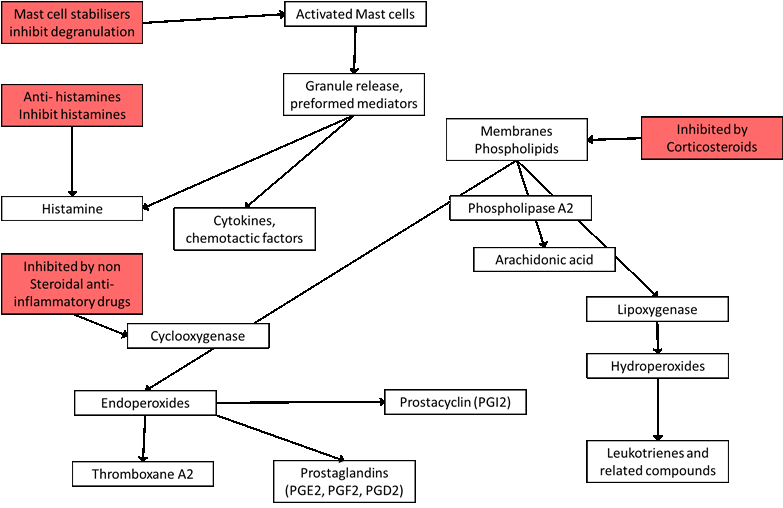
Pharmacological Intervention
Non-Medicated Treatment
- Remove allergen
- Steam clean curtains, bedding & carpets
- Cold compresses
- Reduces vasodilation, edema, itch
- Artificial tears
- Wash away allergens
- Vasoconstrictors
- Rebound hyperemia
- Long term use toxicity
Antihistamines
- Block action of histamine through competitive inhibition of H1 receptors
- Does not block inflammatory mediators formed from arachidonic acid (Prostaglandins & Leukotrienes)
- Help to alleviate histamine-induced itching
- Short duration of action
- Not beneficial for chronic or severe acute allergies
Mast Cell Stabilizers
- Sodium cromoglycate inhibits mast cell degranulation in the presence of an allergen
- Prevent the release of preformed and the formation of new inflammatory mediators
- No alleviation of existing symptoms, only prevent release of new inflammatory mediators
- Prescribed as seasonal prophylactic
Antihistamine/Mast Cell Stabilizer Combo
- Combination drug of antihistamine and mast cell stabilizing medication
- Simultaneously treat symptoms and deter future hypersensitivity responses
- Allow for continued lens wear in Px with mild ocular allergies
- Instill drop 15 min before lens wear and 2nd drop after lens removal at end of day.
Topical Ocular Allergy Medications
| Antihistamines | Active ingredient | Preservative |
|---|---|---|
| Spersallerg | Antazoline 0.5% Tetryzoline 0.4% | Benzalkonium chloride 0.1 mg/ml |
| Mast cell stabilizer | ||
| Cromabak (Preservative free) Stop-Allerg | Na Cromoglycate 20mg/ml Na Cromoglycate 20mg/ml | None |
| Combo Antihistamine/Mast Cell stabilizer | ||
| Zaditen | Ketotifen 0.025% | Benzalkonium chloride 0.1 mg/ml |
| Patanol | Olopatadine 0.1% | Benzalkonium chloride 0.1 mg/ml |
| Relestat | 0.5 mg of epinastine hydrochloride. (equivalent to 0.436 mg epinastine) | Benzalkonium chloride 0.1 mg/ml |
| NSAID | ||
| Acular | Ketorolac 0.5% | Benzalkonium chloride 0.1 mg/ml |
| Steroid | ||
| Alrex | Loteprednol 0.2% | Edetate Disodium (EDTA) |
Antazoline & Tetryzoline
- Antazoline is an anti-histamine of the ethylenediamine class, which are selective H1-antagonists.
- When used systemically, this group of anti -histamines can cause moderate sedation (despite having weak CNS effects), gastric disturbances, and skin sensitisation.
- Antazoline competitively blocks H1 receptors.
- Effects mediated by HI receptors include the contraction of smooth muscle and the dilatation and increased permeability of the capillaries.
- Tetryzoline is a sympathomimetic with alpha adrenergic activity.
- Its vasoconstrictive effect reduces redness and oedema in allergic conjunctivitis.
- Antihistamines, which act by blocking the H1 histamine receptor, are highly effective in providing relief of itching but are not very active in relieving the associated redness.
- The use of products combining an anti-histamine and a vasoconstrictor is well established in the symptomatic relief of allergic eye disease.
Olopatadine
- Olopatadine is a potent selective antiallergic/antihistaminic agent that exerts its effects through multiple distinct mechanisms of action
- It antagonises histamine (the primary mediator of allergic response in humans) and prevents histamine induced inflammatory cytokine production by human conjunctival epithelial cells
- Data from in vitro studies suggest that it may act on human conjunctival mast cells to inhibit the release of pro-inflammatory mediators
- In patients with patent nasolacrimal ducts, topical ocular administration of Opatadine was suggested to reduce the nasal signs and symptoms that frequently accompany seasonal allergic conjunctivitis
- It does not produce a clinically significant change in pupil diameter
Ketotifen
- Ketotifen is a histamine H1-receptor antagonist.
- In vivo animal studies and in vitro studies suggest the additional activities of mast cell stabilisation and inhibition of infiltration, activation and degranulation of eosinophils
Epinastine hydrochloride
- Epinastine is a topically active, direct H1-receptor antagonist
- Epinastine has a high binding affinity for the histamine H1-receptor and a 400 times lower affinity for the histamine H2-receptor
- Epinastine also possesses affinity for the α1-, α2-, and the 5-HT2 – receptor
- It has low affinity for cholinergic, dopaminergic and a variety of other receptor sites.
- Epinastine does not penetrate the blood/brain barrier and, therefore, does not induce side effects of the central nervous system, i.e., it is non- sedative
- Following topical eye application in animals, epinastine showed evidence for antihistaminic activity, a modulating effect on the accumulation of inflammatory cells, and mast cell stabilising activity
Pharmacological Intervention
NSAID’s
- Inhibit cyclooxygenase
- the enzyme required to convert arachidonic acid into a precursor for prostaglandins
- Increases the threshold of nerve endings
- help alleviating itching
Corticosteroids
- Corticosteroids disrupt the production of arachidonic acid from mast cell membrane phospholipids, inhibiting prostaglandins
- Corticosteroids inhibits
- Vasoactive mediators
- White Blood Cell migration
- Immune reactions
- Do not affect the actual cause of the inflammation but prevent tissue damage cased by inflammation
- Caution is advised due to the immunosuppressive role & the risk of bacterial, viral & fungal super-infection
- 33% of the population is steroid responsive which may lead to elevated IOP
Clinical efficacy
Thomas & Melton
| Drug | Efficacy |
|---|---|
| Hydrocortisone 1%, not used much | 1 |
| Prednisolone 1/8% | 2 |
| Medrysone alcohol 1% suspension, least likely to elevate IOP, long term allergy use | 1 to 2.5 |
| Loteprednol 0.2%, Allergy & dry eye use | 2.5 |
| Flouromethalone alcohol 0.1% | 3 |
| Dexamethasone alcohol 0.1% suspension, phosphate solution 0.1%, highest increase in IOP | 4 |
| Flourmetholone acetate suspension 0.1%, very little IOP effect | 4 |
| Loteprednol 0.5% | 4.5 |
| Prednisolone acetate 0.125% suspension most effective corneal inflammation, phosphate 0.125% solution most effective ant. uveitis | 4 to 5 |
| Predinsolone 1% | 5 |
Ester vs. ketone based steroids
- Ketone – based steroids such as prednisolone, dexamethasone linger in tissues rendering good therapeusis but placing the px at risk for undesirable side effects
- Ester – based steroids provide a potent anti – inflammatory effect, then enzymatic degradation occurs (abundant esterase’s in body), little or no side effects
Fluorometholone
- Fluorometholone is a synthetic corticosteroid (glucocorticoid), a derivative of desoxyprednisolone. It is a member of the group of universally known steroids used for the treatment of eye inflammation
- Glucocorticosteroids bind to cytoplasmic receptors and control the synthesis of infection mediators thus damping inflammatory reactions (swelling, fibrin deposition, capillary dilatation, phagocyte migration) and also capillary proliferation, collagen deposition and scarring
- Although topical corticosteroid treatment often increases intraocular pressure both in normal eyes and in the eyes of a patient with increased intraocular pressure, fluorometholone increases intraocular pressure less than, for example, dexamethasone
- A study showed that fluorometholone after six weeks’ treatment increased intraocular pressure statistically significantly less than dexamethasone (mean change dexamethasone: 9 mmHg, mean change fluorometholone: 3 mmHg)
Dexamethasone
- Corticosteroids achieve their anti-inflammatory effects through suppression of vascular endothelial cell adhesion molecules, cyclooxygenase I or II, and cytokine expression
- This action culminates in a reduced expression of pro-inflammatory mediators and the suppression of adhesion of circulating leukocytes to the vascular endothelium, thereby preventing their migration into inflamed ocular tissue
- Dexamethasone has marked anti-inflammatory activity with reduced mineralocorticoid activity compared with some other steroids, and is one of the most potent anti-inflammatory agents
- 4x more potent than hydrocortisone
Prednisolone
- Prednisolone acetate is a synthetic adrenocorticoid with the general properties of prednisolone
- Adrenocorticoids diffuse across cell membranes to complex with cytoplasmic receptors and subsequently stimulate synthesis of enzymes with anti-inflammatory effects
- Glucocorticoids inhibit the oedema, fibrin deposition, capillary dilation and phagocytic migration of the acute inflammatory response as well as capillary proliferation, deposition of collagen and scar formation
- Prednisolone acetate has, on a weight to weight basis, a potency three to five times that of hydrocortisone
Loteprednol etabonate
- Loteprednol etabonate is a new class of corticosteroid with potent anti-inflammatory activity designed to be active at the site of action
- Its anti-inflammatory activity is similar to the most powerful steroid used in ophthalmology but with less intraocular pressure
- Animal studies have shown that loteprednol etabonate has a binding affinity to steroid receptors that is 4.3 times greater than dexamethasone
- This new class of steroids consists of bioactive molecules whose in- vivo transformation to non-toxic substances can be predicted from their chemistry and knowledge of enzymatic pathways in the body
- Cortienic acid is an inactive metabolite of hydrocortisone and analogs of cortienic acid are also devoid of corticosteroid activity
- Loteprednol etabonate is an ester derivative of one of these analogs, cortienic acid etabonate
Corticosteroids
| Maximum strength steroids | ||||
| Spersadex | Dexamethasone disodium phosphate 0.1% | Suspension | Benzalkonium chloride 0.1 mg/ml | Novartis |
| Lotemax | Loteprednol etabonate 0.5% | Suspension | EDTA | Bausch & Lomb |
| Pred Forte and generic | Prednisolone acetate 1% | Suspension | Benzalkonium chloride 0.1 mg/ml | Allergan and generic |
| Vexol | Rimexolone 1% | Suspension | Novartis | |
| Maxidex | Dexamethasone | Suspension | Benzalkonium chloride 0.1 mg/ml | Novartis |
| Moderate strength steroids | ||||
| Pred mild | Prednisolone acetate 0.12% | Suspension | Benzalkonium chloride 0.1 mg/ml | Allergan |
| Flucon | Flourometholone acetate 0.1% | Suspension | Benzalkonium chloride 0.1 mg/ml | Novartis |
| FML | Flourometholone alcohol 0.1% | Suspension | Benzalkonium chloride 0.1 mg/ml | Allergan |
| Alrex | Lotoprednol etabonate 0.2% | Suspension | EDTA | Bausch & Lomb |
Topical Antibiotic/steroid combination drugs
| FML Neo | Flourometalone 1.0mg/ml Neomycin sulphate 5.0mg/ml | Allergan | Benzalkonium chloride 0.1 mg/ml | Suspension |
| Maxitrol | Dexamethasone 0.1% Neomycin 0.35% Polymyxin B | Novartis | Benzalkonium chloride 0.1 mg/ml | Susp./ung |
| Zylet | Lotoprednol etabonate 0.5% Tobramycin 0.3% | Bausch & lomb | EDTA | Suspension |
| Spersadex comp | Dexametasone disodium phosphate 1mg Chloramphenicol 5mg | Novartis | Benzalkonium chloride 0.1 mg/ml | Solution |
| Tobradex | Tobramycin 0.3% Dexamethazone 0.1% | Novartis | Benzalkonium chloride 0.1 mg/ml | Susp./ung |
Microbial infection
- Bacteria
- Staphylococcus
- Streptococcus
- Pseudomonas
- Serratia
- Fungi, viruses & Ameobas
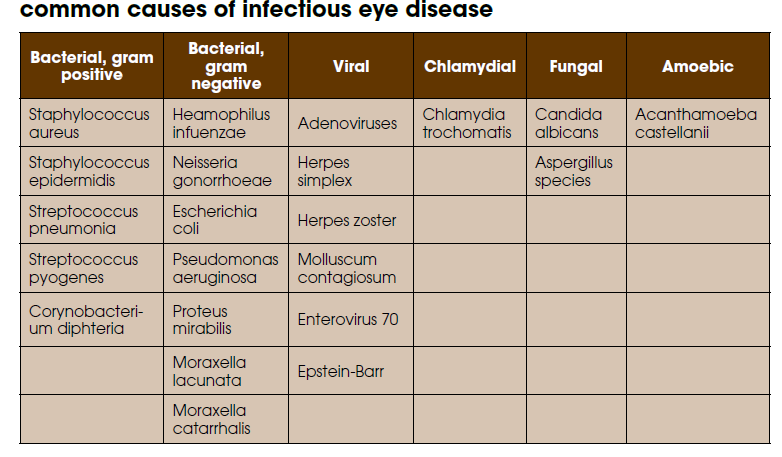
Most commonly isolated microbes in bacterial conjunctivitis
S.Aureus (most common in adults)
S.Epidermidis
Strep.pneumoniae
H. Influenzae
Moraxella catarrhalis
“If you are going to treat bacterial conjunctivitis, you had better treat it quickly before it gets better on its own”
Lou Catania OD
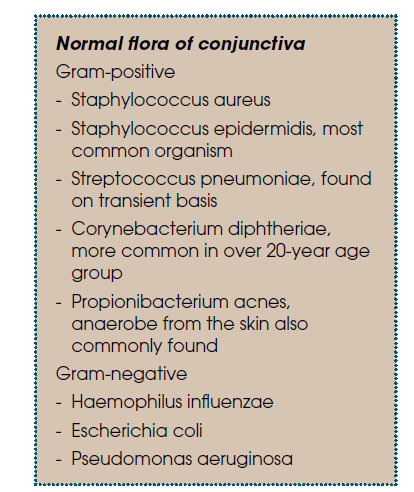
Why aren’t we all infected???
Theses organisms are everywhere
Three critical corneal defense layers
- Tears, Epithelium, Basal lamina
- Redundancy
- suggests all three may need to be compromised to get corneal infection
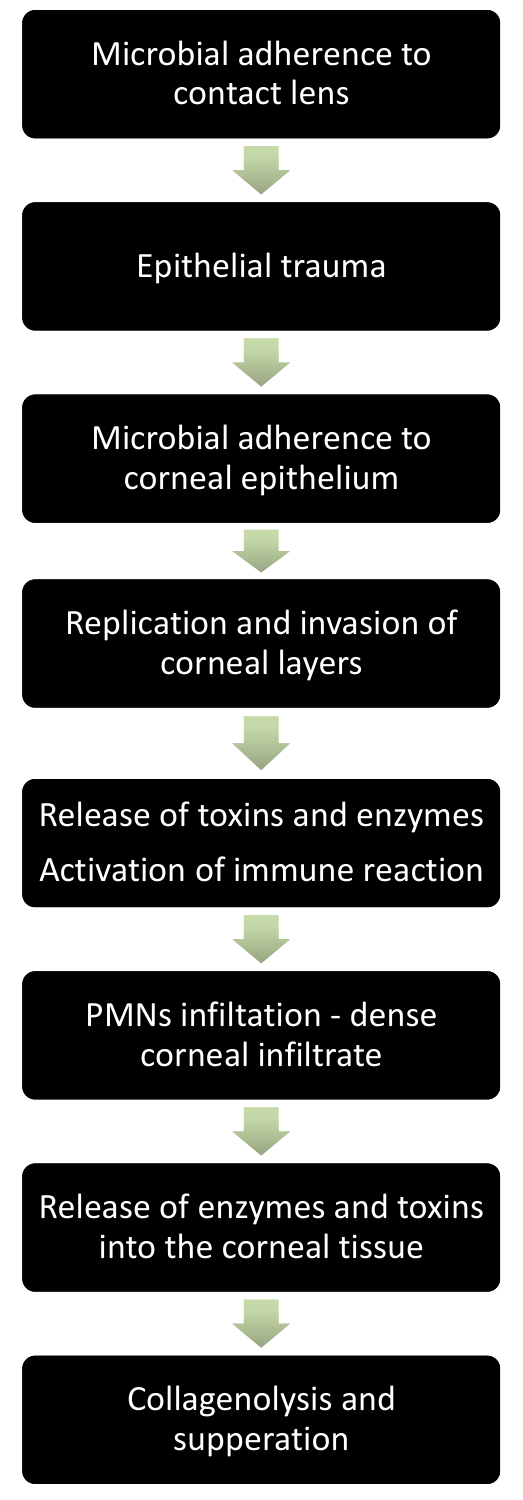
Why is contact lens wear associated with an increased risk of MK?
Its all about the biofilms, mechanical and hypoxic trauma caused by the lenses compromising the corneal defenses!
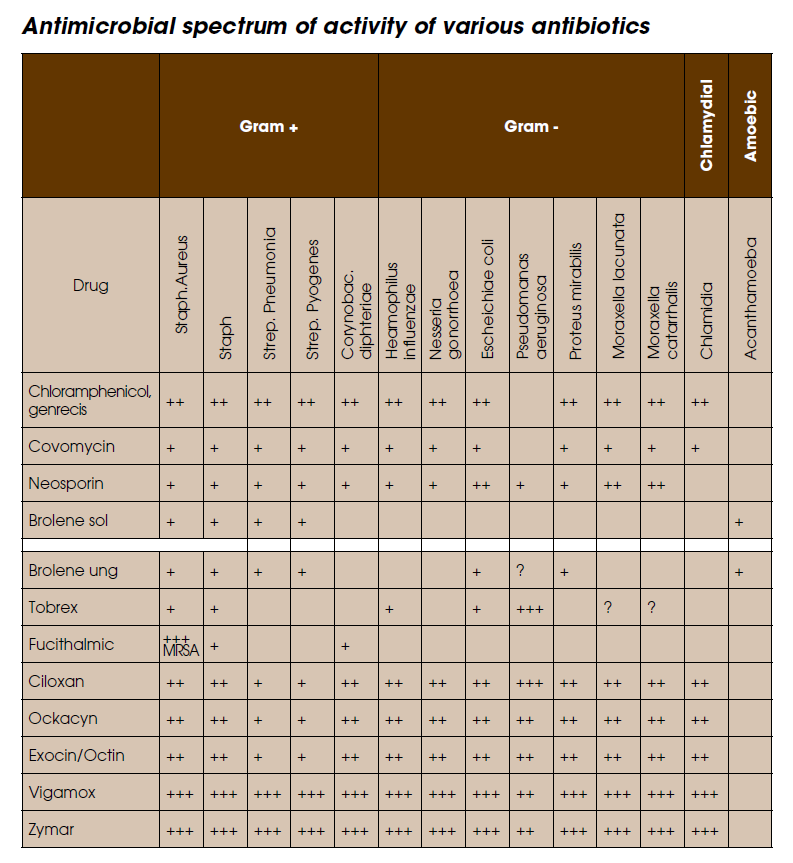
Antibiotic modes of action according to Weinstein
| Bactericidal – kill bacteria Irreversible | Bacteriostatic – stops bacteria from reproducing or slow their growth – immune system kills bacteria Reversible |
|---|---|
| Agents inhibiting the synthesis of bacterial cell walls Penicillin, Cephalosporin, Vancomycin & Bacitracin | Antimetabolites – inhibition of folic acid synthesis Sulphonamides, Aminosalicilic acid & Sulphones |
| Agents affecting the permeability of the bacterial cell walls Polymixin, Amphotericin & Nystatin | Agents primarily inhibiting protein synthesis by their effects on ribosomes Chloramphenicol, Tetracycline’s, Fucidic acid & Macrolides |
| Agents affecting nucleic acid metabolism Fluoroquinolones | |
| Agents primarily inhibiting protein synthesis by their effects on ribosomes Aminoglycosides, Chloramphenicol*, Fucidic acid* & Macrolides* | * Dose dependent – some ATB cidal to certain bacteria and static to others |
Fluoroquinolones
- Most commonly used are
- Ciprofloxacin (Ciloxan Novartis)
- Ofloxacin (Okacyn Allergan)
- Levofloxacin (Exocin)
- The second generation fluoroquinolones are less effective against Gram–positive bacteria which cause 60 to 70% of Microbial Keratitis
- Staphylococcus aureus
- Streptococcus pneumoniae
- They are more effective against Gram–negative Pseudomonas aeruginosa, especially levofloxacin
- Forth generation fluoroquinolones
- Moxifloxacin (Vigamox, Novartis)
- Gatifloxacin (Zymar, Allergan)
- Are more effective against Gram–positive pathogens
- Not so good against Gram–negative pathogens
- They act by inhibiting the two enzymes involved in DNA replication,
- DNA gyrase and
- Topoisomerase IV,
- Considered to be Bactericidal
- DNA gyrase is the main target in Gram–negative bacteria
- Topoisomerase IV, Bactericidal targets the Gram–positive bacteria
- 4th generation inhibits both enzymes limiting resistance and adaption
Aminoglycosides
- Aminoglycosides are potent bactericidal antibiotics that act by creating fissures in the outer membrane of the bacterial cell
- Traditionally, the antibacterial properties of aminoglycosides were believed to result from inhibition of bacterial protein synthesis through irreversible binding to the 30S bacterial ribosome
- They are particularly active against aerobic, Gram-negative bacteria and act synergistically against certain Gram-positive organisms
- Gentamicin is the most commonly used aminoglycoside, but amikacin may be particularly effective against resistant organisms
- Aminoglycosides are used in the treatment of severe infections of the abdomen and urinary tract, as well as bacteremia and endocarditis
- Energy is needed for aminoglycoside uptake into the bacterial cell. Anaerobes have less energy available for this uptake, so aminoglycosides are less active against anaerobes
- Tobramycin and Neomycin are commonly used in ophthalmology
Chloramphenicol
- Chloramphenicol is bacteriostatic and a broad-spectrum antibiotic active against both Gram-positive and Gram-negative bacteria including rickettsia and chlamydia
- It is also found effective against Haemophilus influenzae causing meningitis
- Chloramphenicol is quite toxic and causes serious side effects
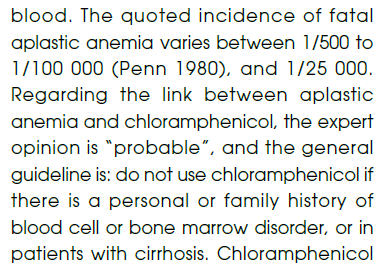
- The most common side effect is a temporary or permanent depression of bone marrow function that results in cessation of formation of blood cells
- It prevents incorporation of haemoglobin by the blood cells, leading to aplastic anaemia
- It also causes thrombocytopenia and leucopenia (depletion of platelets and leucocytes).
- Other side effects are allergic responses or neurotoxic reactions.
- Chloramphenicol is now used (systemically) only in life-threatening situations when other suitable drugs are inadequate
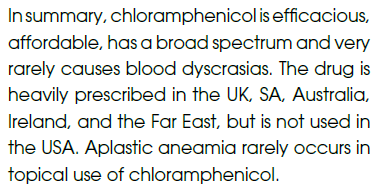
- It is commonly used topically in ophthalmology (not in the USA)
Fatal aplastic anaemia
Topical guide to ophthalmic drugs. Dirk J. Booysen 2013
Fucidic acid
- The antibacterial action of fusidic acid results from the inhibition of bacterial protein synthesis
- Fusidic acid may be bacteriostatic or bactericidal depending on inoculum size
- Fusidic acid has a steroid like structure but does not exhibit any steroid like pharmacological activity (ie. hormonal or anti-inflammatory effects)
- Effective against Staphylococcus aureus, Streptococcus pneumoniae and Haemophilus influenzae
- Enterobacteriaciae and Pseudomonas are resistant to fusidic acid
Propamidine isetionate
- Propamidine isetionate is an aromatic diamidine disinfectant which is active against Gram-positive non-spore forming organisms, but less active against Gram-negative bacteria and spore forming organisms
- It also has antifungal properties
- It may be used topically for the treatment of minor eye infections such as conjunctivitis and blepharitis.
Polymyxin B
- Polymyxin B is an antibiotic primarily used for resistant Gram-negative infections
- It has a bactericidal action against almost all Gram-negative bacilli except the Proteus and Neisseria genera
- Polymyxins bind to the cell membrane and alter its structure (destabilize the cytoplasmic membrane), making it more permeable
- It is generally less active against Gram-positive bacteria
Topical Ocular Antibiotic drugs
| Fluoroquinolones | ||||
| Ciloxan & Foxin | Ciprofoxacin 0.3% | Novartis / Genop | Benzalkonium chloride | Sol/ung |
| Exocin & Octin | Oflaxaxin 0.3% | Allergan / Cipla | Benzalkonium chloride | Solution |
| Okacyn | Lomefloxacin 0.5% | Norvartis | Bezalkonium chloride | Solution |
| Vigamox | Moxifloxaxin 0.5% | Novartis | Self preserved | Solution |
| Zymar | Gatifloxacin 0.3% | Allergan | Benzalkonium chloride | Solution |
| Aminoglycosides | ||||
| Tobrex & generic | Tobramycin 0.3% | Alcon | Chlorbutanol | Sol/ung |
| Others | ||||
| Chloroptic / Chloramex | Chloramphenicol 5.0mg/ml | Allergan | Ung preservative free | Sol/ung |
| Brolene | Propamidine isethionate 1.0mg/ml | Allergan | Benzalkonium cholride | Sol/ung |
| Spersamide | Sodium sulphacetamide 10g | Norvartis | Benzalkonium chloride | solution |
| Spersanicol | Chloramphenicol 0.5g | Norvartis | Mercuric acetate | Sol/ung |
| Fucithalmic | Fucidic acid | Al Pharm | Benzalkonium chloride | ung |